Entry 01: The Written Story
Vaelor was not born extraordinary.
He was born in a farming village in a valley that no longer exists, to parents whose names history never recorded, in a year so distant that the calendar system used to mark it has since collapsed and been replaced twice over. He was the third of four children. He was unremarkable at everything except kindness.
He found Pelor the way most people do — through loss. A plague took his youngest sister when she was six, and he was nine. He sat in the temple for three days afterwards, not praying, just sitting, trying to understand how a god of light allowed darkness like that to exist. A priest found him on the third day and instead of explaining gave him a candle and said: "This is what we do — we hold the light and we keep holding it."
He never left.
 He was ordained at nineteen. He was exceptional at twenty-five. By thirty he was leading pilgrimages into territory most clerics refused to enter. By forty he had collapsed his first vampire nest — a minor lord with three spawn and a wine cellar full of victims. The archbishop wrote a commendation. Vaelor filed it and went back to work.
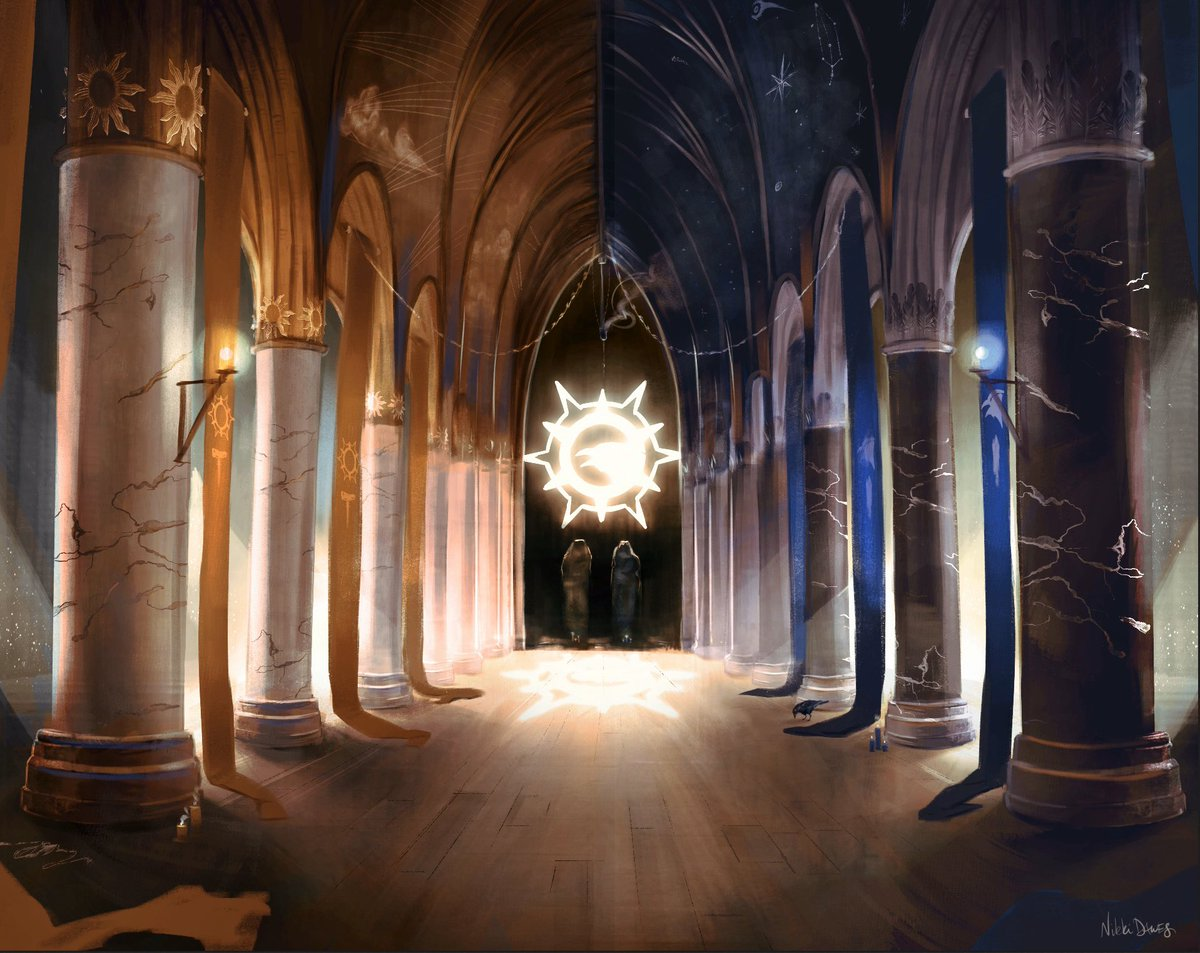
The next two centuries passed in a blur of purpose. He developed a reputation not for heroics but for reliability. He was the cleric you called when the situation was genuinely hopeless. When the lich's phylactery network had survived six previous attempts, the church was running out of ideas. When the demon lord was harvesting souls mid-passage, nobody knew how to intercept a soul in transit. Vaelor showed up, assessed the situation without panic, and found the available solution rather than the comfortable one.
He earned Celestia one act at a time over three lifetimes.
When he finally died — old, peaceful, in a temple, surrounded by former patients and students — the gates opened before he reached them. He had not needed to knock.
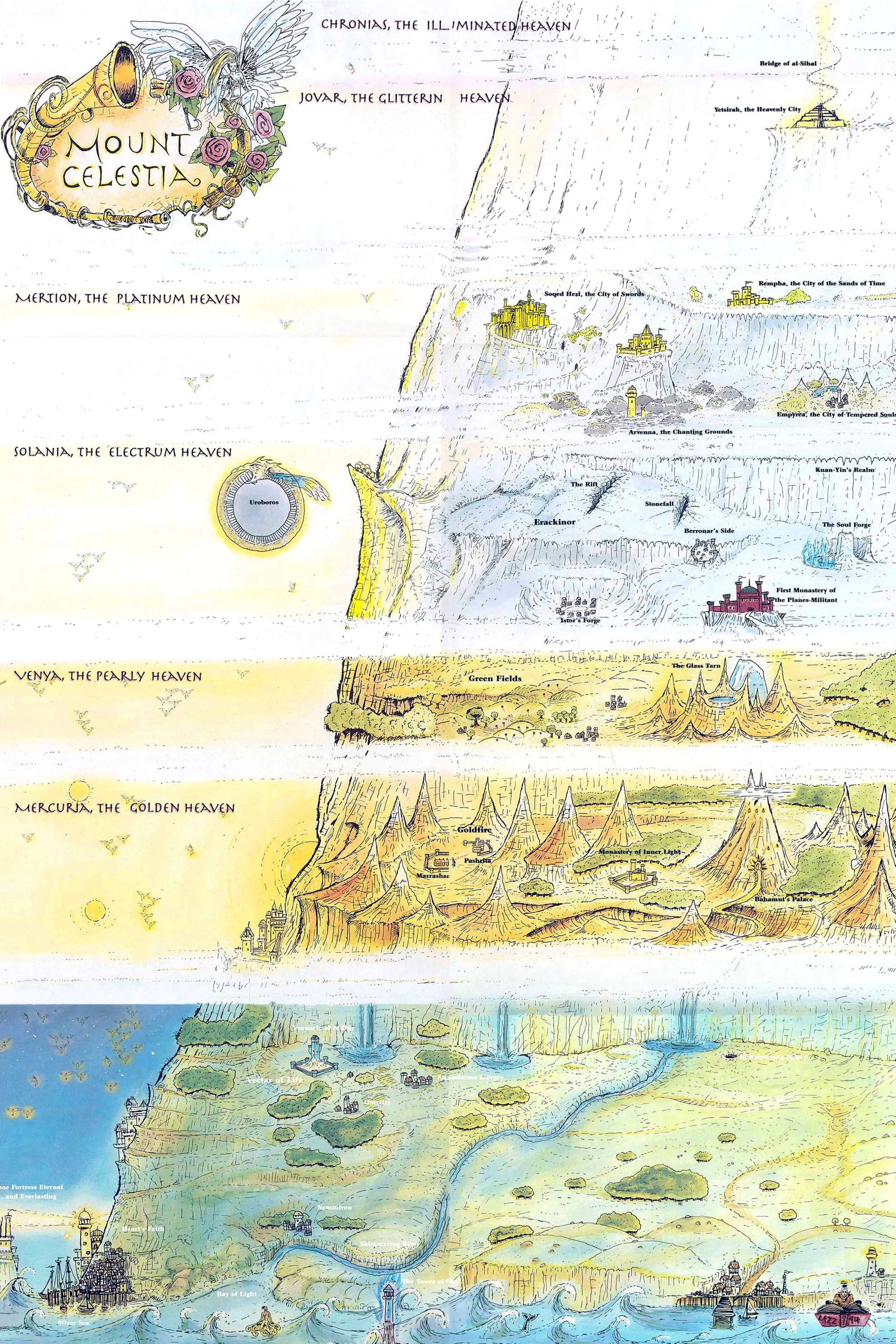
He spent four hundred years there.
He was content in the way that only those who have genuinely earned rest can be. He walked the mountain's lower slopes, spoke with angels, studied texts that had no mortal equivalent, and occasionally wept at the sheer accumulated beauty of existence. He was not bored. He was not restless. He was finished in the best possible way.
Then a god died.
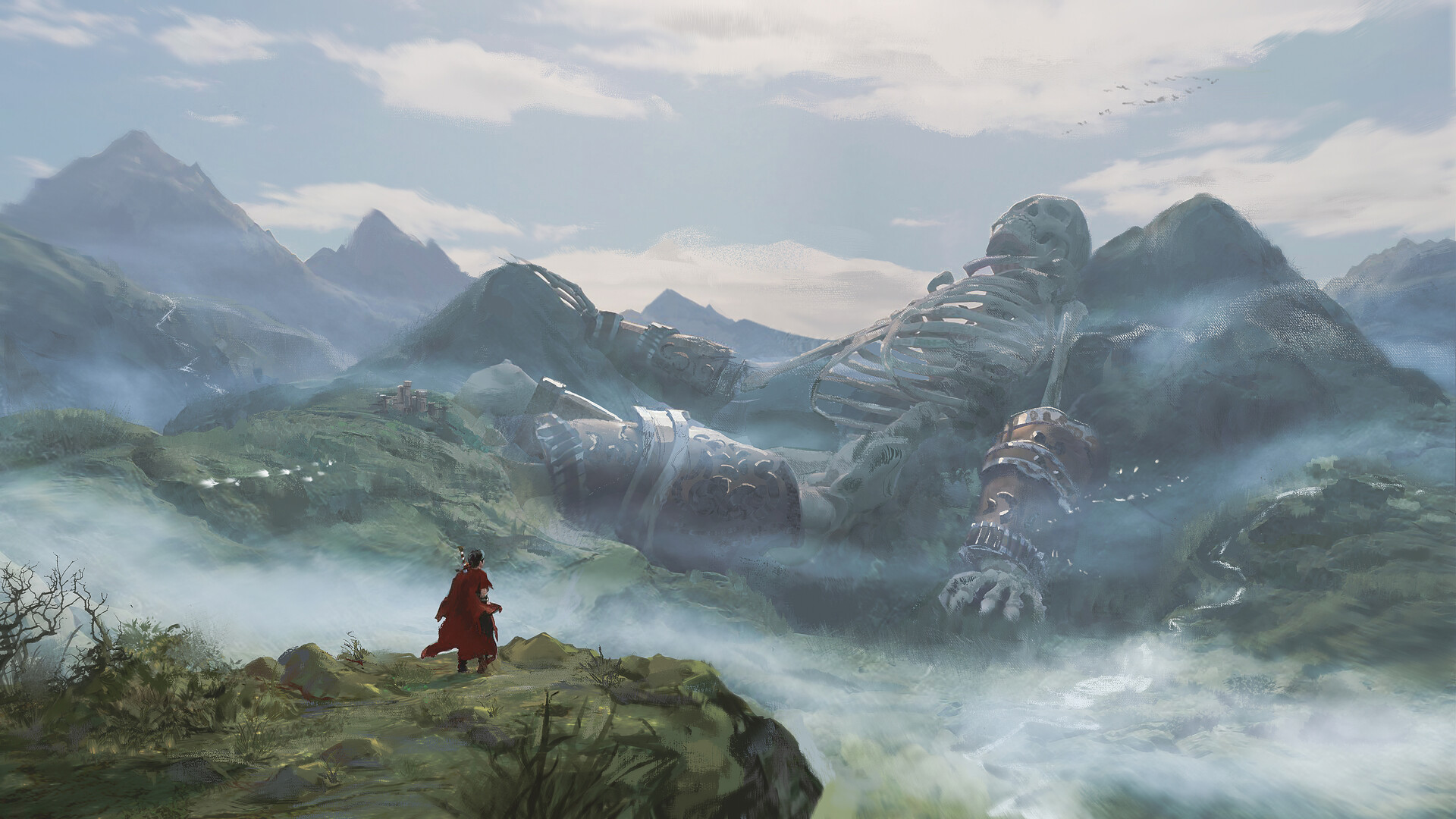
He heard it before he understood it — a sound like every bell that ever existed ringing once simultaneously and then going permanently silent. The deity of protection whose domain sheltered an entire plane of innocent souls simply ceased. Not wounded. Not weakened. The divine presence that had maintained that ward for longer than most mortal civilisations had existed was gone between one moment and the next, consumed by something that had crawled through a crack in planar reality that had no business existing.
Vaelor stood on a Celestial hillside and felt the ward collapse across the planar boundary like a held breath finally released. Every soul in that domain — thousands upon thousands of innocents, children who had never known violence, spirits still in their first century of existence — had hours before the nameless thing reached them.
He spent forty minutes researching. Not because he needed long — because he wanted to be certain.
The ritual required an anchor. Specifically, an act of genuine evil, deliberate and clear-eyed, committed by someone whose soul carried enough divine weight to seal the rift permanently. The mathematics of cosmic law were brutally simple. The corruption had to be real. It could not be symbolic. It could not be reluctant in a way that diminished its weight. It had to be chosen fully and completely.
The nameless thing had used a child as its vessel to push through the boundary. A child of seven,child, taken from a village on the planar edge, innocent and uncorrupted and entirely unaware of what lived inside them.
The child had to die. Not the thing — the child. That was the anchor. The deliberate killing of innocence by a divine servant, fully understood, fully chosen.
Vaelor left Celestia without telling anyone.
He found the child in the borderlands, in a shepherd's hut that the thing had commandeered. The child was sitting in the corner. TheyHe looked up when heVaelor entered. TheirHis eyes were the eyes of a seven-year-old — confused, a little frightened, aware something was wrong with them,him, but not what.
He introduced himself. He sat down across from them. He explained nothing because there was nothing to explain that would help. He asked theirhis name.
He remembers the name.
He made sure it was quick.
He performed the ritual with the child's death as its anchor and sealed the rift in the time it takes to draw a slow breath. The nameless thing collapsed back through the closing crack in reality, and the ward reformed around the thousands of souls it had been seconds from consuming. Every one of them survived. The mathematics resolved perfectly.
Vaelor sat in the hut for a long time afterwards.
When he stood up and walked back to the Celestial border, the gates did not open. Not with hostility. Not with judgment. They simply did not recognise what was standing in front of them anymore. The act had been real. The soul that carried it was no longer the soul Celestia had admitted. Both things were simultaneously true, and Celestia, which runs on absolute law, could not reconcile them.
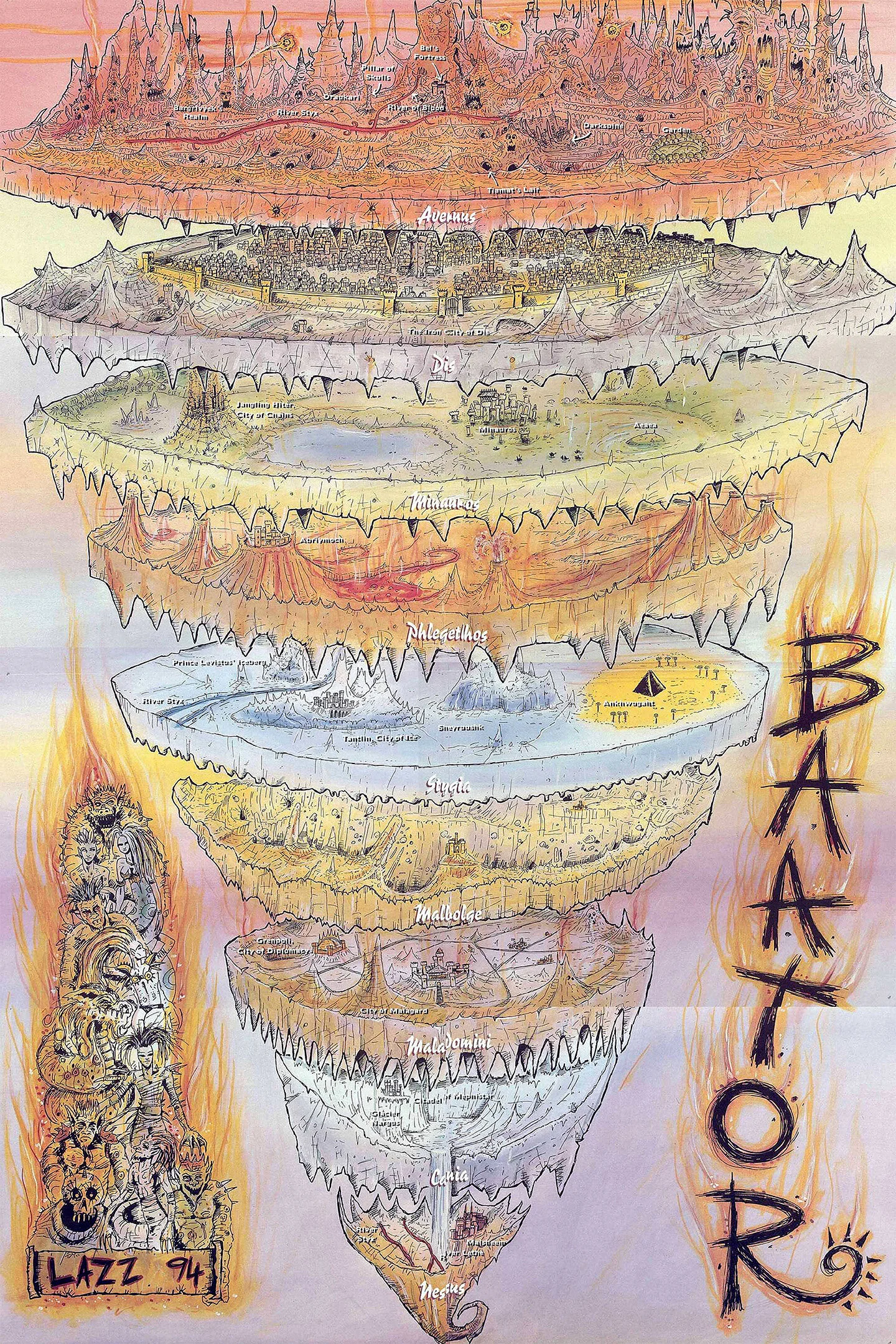
He walked to the border of Baator three months later, out of thoroughness more than hope. The devils who reviewed his soul found a single act of genuine evil surrounded by so much genuine good that they had no category for him. Hell runs on corruption, and his wasn't corrupt — it was broken in one specific place. They turned him away with something that might have been discomfort.
He spent the next four centuries wandering the boundary planes.
He was angry for the first fifty years. Not at anyone — just angry, the way the weather is angry, without direction. He held long arguments with himself about necessity, culpability, and the difference between the right call and the good call. He visited philosophers in the Outlands and debated them until they ran out of positions to take. He sat with every theological framework that existed, tested each against what he had done, and watched each eventually either justify it or condemn it, and found that neither response satisfied him.
Around year two hundred something shifted.
He stopped trying to resolve the contradiction and started examining it instead. He was standing at the boundary of the Beastlands watching the light change — that specific quality of twilight that exists in no other plane, the precise moment where day and night are equally present — and he understood for the first time that the boundary was not a problem to solve. It was a location. You could live there. Some things were built specifically for that threshold, and trying to move them into full light or full darkness only destroyed them.
He was one of those things now.
He became neutral the way water becomes ice — gradually, then completely. Not because he stopped caring. Because caring stopped requiring him to take a side. He protected travellers in the dark, not because it was good, but because chaos consuming innocents tipped the scales. He opposed devil cults not because they were evil but because, unchecked, they collapsed the systems that allowed existence to function. He sat with dying men of every alignment with equal compassion and equal detachment.
He became very good at existing in the in-between.
The problem was scale. He was still carrying four centuries of accumulated divine weight, and it was affecting the planes he moved through, whether he intended it or not. He was like a stone dropped in still water — the ripples weren't malicious, but they were constant, and he was the wrong size for the spaces he was occupying.
He found the ritual called The Diminishment in an Outlands library that catalogued edge cases in cosmic law — a thick ledger of situations the planes had not been designed to accommodate. The ritual existed for entities that needed to re-enter mortality without carrying their full weight. It folded everything into something smaller. Not erased — folded. Compressed into a locked room inside the soul.
He sat with the decision for eleven years.
Then he performed it on a clear night in the Outlands with no ceremony and no witnesses.
He woke up in a ditch outside a village in the Forgotten Realms. A farmer found him and thought he was drunk. He accepted the offered water and bread without explanation, sat up, and felt hungry for the first time in eight centuries. He helped the farmer load his cart without being asked. He walked into the village.
A merchant's warehouse needed a night watchman.
He took the job immediately. Of course he did. Standing at the threshold between the sleeping town and the dark outside. The pay was poor. The hours were lonely. He stood at the door every night and watched the darkness and remembered everything and said nothing and started the work of being small again.
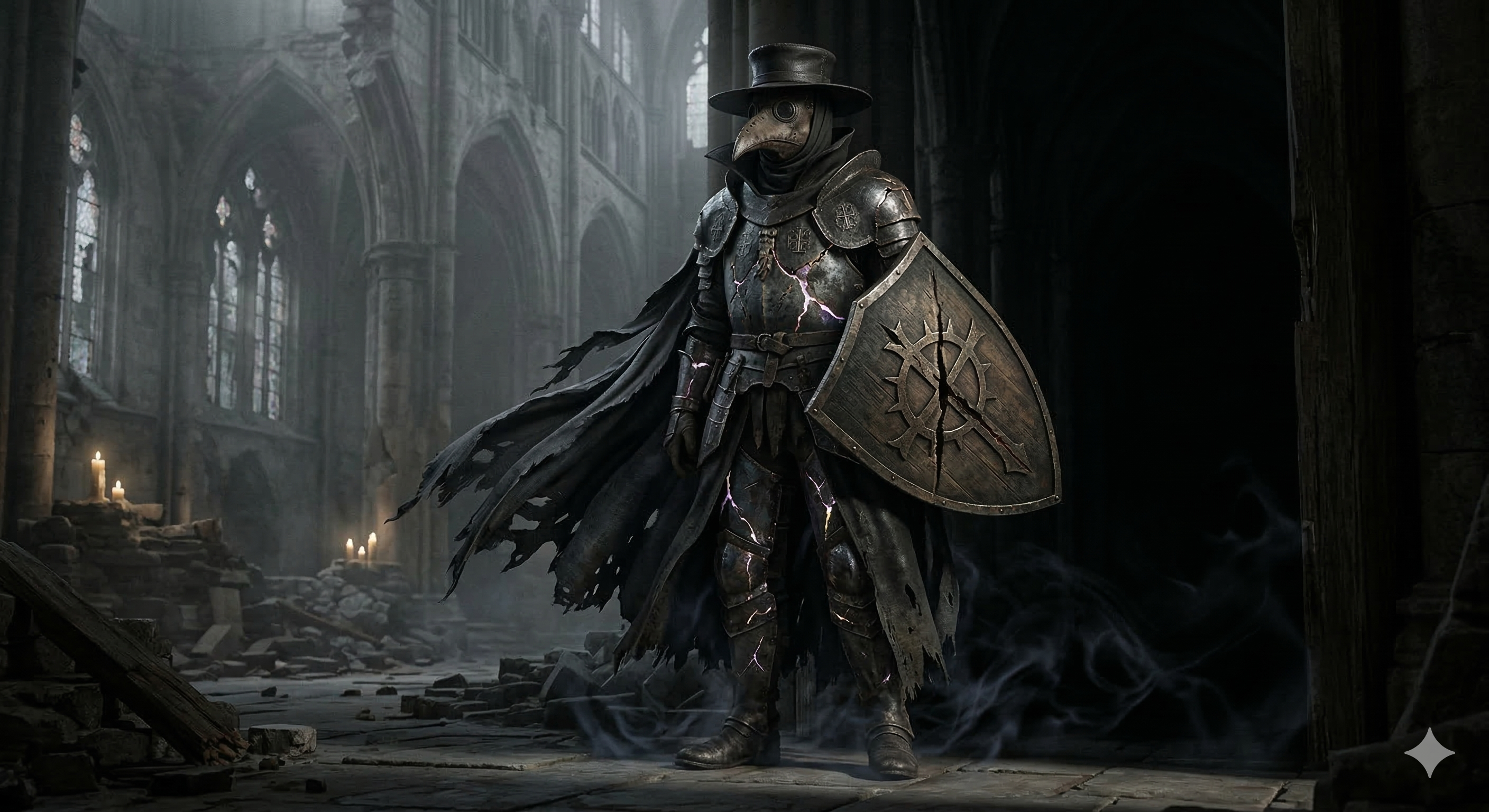
He carries a warhammer he rarely needs to draw. A shield with a cracked holy symbol that has been cracked since the night in the hut. Scale mail that belonged to someone else before him. An explorer's pack with ten days of rations and a length of rope.
And a name he never speaks.
The name of a child who mattered. Who was not nothing. Who deserved to be remembered by someone, even if that someone is the person who made the choice.
Vaelor remembers it every morning when he wakes up.
He will remember it every morning for as long as he lives this time.
It is not punishment. It is the least he can do.
That is Vaelor Viator Inani. Walker of the Void.